Mandate’s Contribution to the Independent COVID-19 Evaluation Panel on the Economic Impact of the Pandemic
Thursday 11 December 2025On Monday 10th November, the COVID-19 Evaluation panel held a roundtable forum focusing on the economic impacts of the COVID-19 pandemic.
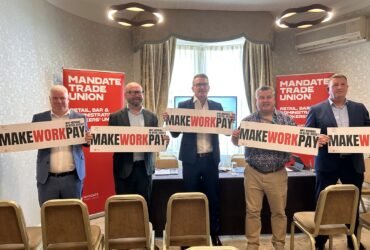
The event featured some of Ireland’s main business and worker representative bodies and stakeholders, including Mandate Trade Union. The economic roundtable heard from each of these organisations on how the pandemic, and the measures taken to manage and mitigate it, impacted their members, employees and industries.
Speaking about the impact of the COVID-19 response on retail and bar workers in Ireland, Mandate Assistant General Secretary Jim Fuery told the panel that workers felt abandoned:
“What people need to understand is that retail has a tradition of families working within it, but they’re now telling their children not to enter the sector. They believe they weren’t offered the thousand euro of the healthcare workers, despite the fact that 23% (compared with 20% in healthcare) were the actual workers on the front line [in retail]. They feel abandoned. They feel that the sector is vulnerable to another pandemic.”
Fuery also criticised the replacement of the Health and Safety Representative with the Lead Worker Representative role:
“The lead worker representative should never have replaced the health and safety rep. It should have been given greater strengths. It should have been given a position that recognised what it was actually doing. And it should have been a collaborative position with management and with their fellow colleagues. That’s not what it turned out to be in many places. It turned out to be a box ticking exercise.”
Outlining the importance of low paid jobs, such as retail, Fuery stated that:
“There has to be a realisation that certain jobs within our economy, within our civil society, are hugely important – low paid jobs. Another thing that was of great impact was those who earned less than the PUP payment found themselves with a tax bill. Those who contracted long COVID found themselves still with medical bills and no state supports.”
He concluded by warning the panel that more workers will leave their jobs if they are not afforded adequate support and recognition:
“I think, by and large, the employers embraced the recommendations from NEPHET and the Government and tried as best they could. But I think there are lessons to be learned, and one of them is; we either place a value on the tasks and duties that people carry out in our society or we don’t. And if we don’t, the reality is those people are leaving those sectors and will continue to leave those sectors, because they won’t want to put themselves at risk again.”
The purpose of the inputs given from participants of the panel is to assist the COVID-19 Evaluation in its process of assessing overall strengths and weaknesses of the pandemic management approach, including managing competing sectoral policy objectives.
Speaking after the stakeholder roundtable, Prof Anne Scott, Chairperson of the COVID-19 Evaluation said:
“This roundtable allowed us to hear from a range of stakeholders well placed to comment on the impact of the pandemic on our economy, businesses and workers. While there have been many reports and analysis on the economic and broader impacts of COVID-19, the insights we have gathered from this event and wider consultations and engagements, are core to our understanding of the multifaceted impact of the pandemic and the measures taken to manage and mitigate it. Our goal is to produce a thorough, independent assessment of Ireland’s pandemic response. One that reflects real life as well as official records.”
You can watch the full roundtable discussion here.